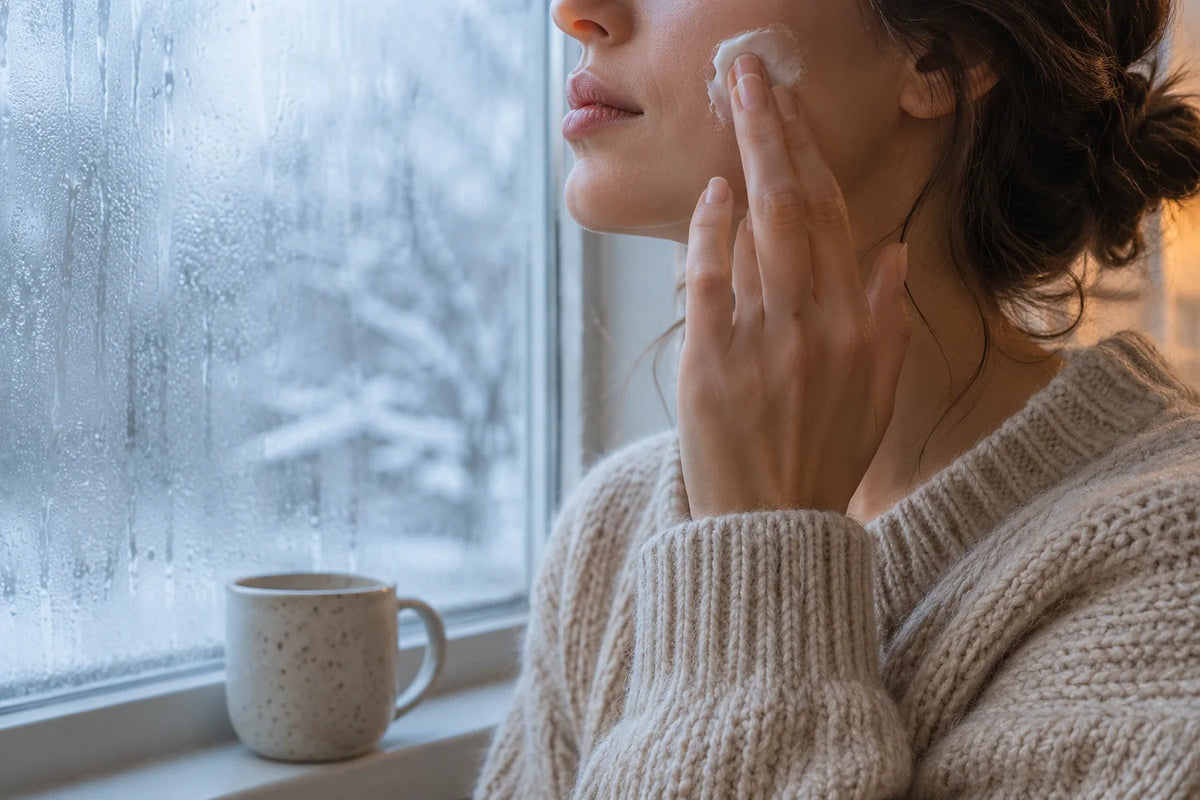
That tight, rough feeling and fine flaking you notice in winter usually does not mean your skin is damaged, it means the outermost layer cannot hold on to water. Cold weather, indoor heating, and hot showers all stress that layer at the same time. The good news: most winter dryness improves quickly with a few smart habits and a moisturizer with the right texture.
This guide explains what causes skin dryness, why flaking on the face is not always dryness, and what hydrates dry skin best. You will also find when it is time to see a dermatologist.
Quick Answer
Skin dryness happens when the outermost layer of the skin cannot hold enough water and oil. In winter, cold air carries less moisture, indoor heating dries out the air, and hot, long showers strip the skin of its protective oils.
What helps most is short, lukewarm cleansing, a gentle cleanser, and applying a cream while skin is still slightly damp. In that cream, look for ingredients like glycerin, hyaluronic acid, shea butter, or ceramides. If you have oily-looking, yellowish flakes around the sides of the nose and between the brows, the issue may not be dryness.
Every part of that answer relates to what is happening in the very top layer of the skin in winter. The first step is learning what dryness looks like.
What Is Skin Dryness, and What Are the Symptoms?
Skin dryness, medically known as xerosis, is when the outermost layer of the skin cannot hold enough water and oil. Think of this layer like a brick wall: the bricks are dead skin cells, and the mortar between them is a lipid mix made up of ceramides, cholesterol, and fatty acids. When the mortar thins, water evaporates away and the skin becomes dry.
Dryness usually shows up with these symptoms:
- Tightness: Especially after washing your face, feeling like the skin has shrunk is one of the earliest and most common signs of dryness.
- Roughness and dullness: The surface feels bumpy to the touch. Because the skin does not reflect light evenly, it can look tired and less radiant.
- Fine flaking: Small, whitish flakes that lift like dandruff appear on the cheeks, chin, and around the mouth.
- Itching and redness: As dryness increases, the skin becomes easier to irritate and can look red in patches.
- Fine lines and cracks: This is a sign of more advanced dryness, and according to Cleveland Clinic, severe dryness can crack and bleed.
At this point, it helps to separate two concepts people often mix up. Dry skin naturally produces less oil, while dehydrated skin loses water even though oil is still present. When oily skin feels tight in winter, it is usually the second situation. We explain this difference in detail in our skin care guide for beginners.
Why Does Skin Get Dry in Winter?
Winter dryness does not come from one single cause, it is the result of several factors hitting at once. Some are about the weather, and some are about the habits we tend to change in winter.
Cold air holds less moisture: As air gets colder, the amount of water vapor it can hold decreases. Even if outdoor humidity looks high, that same air becomes very dry once it is heated indoors. Skin exposed to dry air also releases more water to its surroundings.
Heaters, stoves, and AC dry out indoor air: In heated rooms, air becomes even drier, and because we spend most of the day indoors in winter, skin stays exposed for hours.
Hot, long showers strip protective oils: Hot water, which is tempting on cold days, dissolves the skin's oil layer. For this reason, the American Academy of Dermatology (AAD) recommends limiting showers to five to ten minutes and using lukewarm water.
Harsh cleansers and lots of foam can worsen dryness: Products that lather heavily can also remove the skin's already reduced oil. The AAD recommends using only enough cleanser to remove dirt and oil, and avoiding thick lather.
Wind, sudden temperature changes, and age also matter: Wind quickly removes surface moisture, and moving from cold outdoors to a warm environment can stress the skin. As we age, the skin produces less oil, so winter dryness can feel more noticeable.
According to a review examining the effects of climate conditions on skin, low humidity and low temperature generally weaken skin barrier function. Under these conditions, skin is also more vulnerable to mechanical stress. The same review shows that in cold, dry weather, skin reacts more easily to irritants and allergens, and atopic dermatitis flares more often during this period.
That is why winter dryness is not only a cosmetic issue. When the barrier weakens, skin can react even to a product you used in summer with no problem. This is the main reason to keep your winter routine simple.
Is Every Kind of Flaking on the Face Dryness? Read It by Area
Most people who see flaking on the face go straight to moisturizer. But where the flakes show up and what they look like gives an important clue about what is really going on. The table below breaks down the most common winter scenarios by area.
| Area and appearance | Possible cause | First step |
|---|---|---|
| Cheeks, chin, around the mouth: fine white flakes and tightness | Winter dryness | Short, lukewarm cleansing, cream on damp skin, consistent care for two weeks |
| Sides of the nose, between the brows, hairline: oily-looking, yellowish or white flakes and redness | May be seborrheic dermatitis | Moisturizer alone will not solve it; dermatologist evaluation is needed |
| Eyelids, neck, flexural areas: itchy, red, sometimes oozing areas | May be eczema or contact dermatitis | Pause new products and consult a physician |
| Burning and flaking that starts in one area after a new product | Product-related irritation | Stop the product and let the skin recover with a simple routine |
Swipe sideways to see the full table
The second row is especially important, because seborrheic dermatitis is a common skin condition that causes oily patches covered with white or yellow scales in areas rich in oil glands. According to Mayo Clinic, symptoms flare with stress, fatigue, and seasonal changes. When it worsens in winter it can look like dryness, but the treatment is different.
This distinction also explains a common mistake. Picking at flakes around the nose with your nails or trying to scrub them off with a harsh peel only irritates the area more. If the flakes look oily and keep showing up in the same spots, the first step is not moisturizer, it is a medical evaluation.
What Helps with Dry Skin? The First Two-Week Plan
Fixing winter dryness does not require an expensive or complicated routine. The AAD recommendations come down to a few simple changes most people can do at home.
- Shorten cleansing time and keep water lukewarm: Keep showers to five to ten minutes and use lukewarm water instead of hot. When washing your face, water temperature matters just as much.
- Use less cleanser: Choose a fragrance-free, lightly foaming cleanser. You only need enough product to remove dirt and oil, there is no need for thick lather.
- Pat dry with a towel: Instead of rubbing, gently press with a clean towel. According to the AAD, rubbing dry can irritate very dry skin.
- Apply moisturizer while skin is damp: A cream applied right after drying, while skin is still slightly damp, helps keep surface water in the skin. Reapply during the day as tightness returns.
- Choose a cream instead of a lotion: According to the AAD, creams and ointments provide more moisture than lotions. That is why switching from a lightweight gel you use in summer to a richer texture in winter makes sense.
- Humidify the bedroom: A humidifier running while you sleep can reduce the effect of dry air overnight, but the device must be cleaned regularly to prevent mold.
- Pause drying products: When skin is dry, products containing alcohol, fragrance, and retinoids can increase irritation. The AAD recommends taking a break from these until dryness improves.
Dermatologists reviewing the American Academy of Dermatology dry skin guide base at-home relief on short, lukewarm baths, a gentle cleanser, and a moisturizer applied while the skin is damp. The guide notes that fragranced products can irritate dry and sensitive skin. For that reason, it recommends choosing products labeled fragrance-free.
One small detail in the guide helps when reading labels. On English labels, "unscented" does not mean fragrance-free. These products can contain ingredients that mask the scent of other ingredients and can still irritate dry skin. The phrase to look for is "fragrance-free."

The results of this plan are usually visible quickly: according to the AAD dry skin recommendations, when these steps are done consistently, most people notice improvement within two weeks.
What Hydrates Dry Skin Best? Humectants, Emollients, and Occlusives
A good moisturizer does three different jobs at once. It draws water into the skin, softens the spaces between cells, and leaves a thin layer on the surface that slows down water evaporation. The best product for dry skin is the one that does all three in proportions that match how dry your skin is.
| Job | What it does | How it appears on the label |
|---|---|---|
| Humectants | Bind water and hold it in the top layer of the skin | Glycerin, Sodium Hyaluronate, Urea, Betaine, Sodium PCA, Panthenol |
| Emollients | Fill gaps between cells and reduce roughness | Butyrospermum Parkii (shea) Butter, Simmondsia Chinensis (jojoba) Oil, Squalane, Ceramide NP |
| Occlusives | Create a thin surface layer and slow water loss | Petrolatum (vaseline), Dimethicone, Lanolin, Mineral Oil |
Swipe sideways to see the full table
The AAD ingredient list for dry skin includes all three groups together: glycerin, hyaluronic acid, lactic acid, shea butter, jojoba oil, lanolin, dimethicone, mineral oil, and petrolatum. There is no single miracle ingredient, what works is balance.
That balance is not hard to spot on the label. For example, the ingredient list for Lumene Nordic Hydra 72 Hour Intense Hydration Cream sold at Güzellik Burada lists glycerin in the third position. It is followed by shea butter, xylitol, betaine, urea, and three different forms of hyaluronic acid. In other words, the cream combines humectants and emollients.

There is also a small caution about humectants. If a hyaluronic acid serum is left on its own, especially in dry air, it may not feel as comfortable as you expect. In winter, a cream should go on top. The serum pulls water into the skin, and the cream slows down that water from evaporating.
Gel or Cream in Winter? Choosing Texture by Skin Type
The need to switch moisturizers in winter is felt across skin types, but not everyone needs to move in the same direction.
For dry skin, lightweight products used in summer are usually not enough in winter. A cream with shea butter or other richer oils keeps skin comfortable longer in dry air. Adding a few drops of face oil over the cream before bed is another option.
For combination and oily skin, heavy creams can raise concerns about clogged pores. The solution here is an oil-free gel that still attracts moisture and supports the barrier. A lightweight gel with ceramides and glycerin can reduce tightness without increasing shine. If your T-zone is oily but your cheeks are dry, you can also use two products by area.
For sensitive skin, priority is a short ingredient list, because fragrance-free, alcohol-free formulas with fewer ingredients reduce the risk of irritation. Testing a new product on a small area for a few days, like behind the ear or under the jawline, is a smart precaution.
Does Drinking Lots of Water Fix Dry Skin?
The most common advice for winter dryness is to drink more water. Many pages in Turkish search results put this at the top of the list. Drinking water is important for overall health, but the evidence that it fixes dryness in the outer layer of the skin is not as strong as many people assume.
A systematic review examining the effect of fluid intake on skin hydration in healthy adults reports that the evidence is limited in both number and methodology. In the studies reviewed, additional water intake led to a slight increase in skin hydration. This increase was most noticeable in people who were already drinking little water. Whether drinking more water reduces symptoms of dry skin is still an open question.
The practical takeaway: if you do not drink much water, increasing intake may benefit your skin too. But if you are already drinking enough and your face still feels tight, the issue is not in the glass, it is on the surface. Winter dryness is addressed from the outside, with the right moisturizer.
The same general picture applies to nutrition: a balanced diet supports skin health, but no single food or supplement solves winter dryness on its own. If a clear deficiency is suspected, the decision about supplements should be made with blood tests and a physician.
What Should a Winter Skin Care Routine Look Like? Morning and Night
A winter routine does not have to be longer than a summer routine. What changes is not the number of products, but the texture and the order of steps.
In the morning, wash your face with lukewarm water and a small amount of gentle cleanser. While skin is still damp, you can apply a hydrating serum if you like, then follow with a cream. The last step is sunscreen, and we explain why you still need it in winter in our beginners guide. If you want hydration and sun protection in one step, see Lumene SPF 50 Refreshing Intensive Moisturizer Cream.
At night, gently remove the day's dirt and sunscreen. Then apply a slightly richer cream than you use during the day. If skin is very dry, you can add a few drops of face oil over the cream or apply a thin layer of vaseline only to the areas that get dry.
Active ingredients are not completely off-limits in winter, but when you are actively dry, you should take a break. Retinol, AHA, and exfoliators can be restarted at two to three nights per week once skin has recovered. We walk through that transition step by step in our retinol guide.
Dry Areas Beyond the Face: Hands, Lips, and Heels
In winter, dryness is often noticed on the hands before the face. Hands are washed frequently, exposed to cold without protection, and have fewer oil glands than the face. The AAD recommends applying a hand cream that does not leave a greasy feel after every hand wash and wearing gloves in cold weather or while doing dishes.

For the body, clothing choices matter more, because wool and synthetic fabrics and tight cuts can irritate dry skin. The AAD recommends wearing a cotton or silk layer underneath these clothes.
Because lips have no oil glands, they are the fastest area to dry out in winter. If you have cracking, stinging, and peeling on the lips, our lip cracking guide explains lip-specific care in detail.
Thickened skin on the heels is also more prone to cracking in winter. After an evening shower, applying a rich foot cream and then wearing cotton socks helps extend the effect overnight. One option for this is Burt's Bees Coconut Foot Cream with Vitamin E, which lists glycerin, olive oil, and oat in its ingredient list.
Dry Skin Can Be a Symptom of What Condition?
Winter dryness is usually not a serious issue and improves with care. But sometimes dryness can be the first visible sign of an underlying condition. Cleveland Clinic lists allergies, eczema, diabetes, and kidney disease among conditions that can cause dry skin.
The StatPearls xerosis section, a clinical reference for physicians, adds thyroid disorders, psoriasis, and side effects of certain medications to that list. According to the same source, when appropriate, a physician may evaluate thyroid hormones and vitamin levels with lab tests.
When to See a Dermatologist for Dry Skin
Dryness that does not improve in two to four weeks: If dryness persists despite consistently following the recommended care, an underlying cause should be considered.
Bleeding cracks, oozing, or increased warmth: Open cracks can create a pathway for infection and may require treatment.
Intense itch that disrupts sleep: This can be a sign of a condition like eczema that requires treatment.
Oily flakes around the sides of the nose, between the brows, and at the hairline: This may be seborrheic dermatitis and will not improve with moisturizer.
Fatigue, feeling unusually cold, weight changes, or excessive thirst along with dryness all over the body: Causes such as thyroid issues and blood sugar should be evaluated.
This information is for cosmetic informational purposes and does not replace medical advice.
Outside of these situations, dryness that starts with the season and is limited to facial tightness and fine flaking usually responds well to routine changes. This is exactly where product choice becomes important.
Which Products Are Suitable for Dry and Dehydrated Skin?
In the Güzellik Burada dry and dehydrated skin edit, you will find different textures that attract moisture, soften, and support the barrier. The options below were selected based on the criteria above and the ingredient lists on the product pages.
For Anyone Looking for a Main Winter Moisturizer
Lumene Nordic Hydra 72 Saat Yogun Nem Kremi 50 ml
- The ingredient list includes glycerin, shea butter, urea, and three forms of hyaluronic acid
- According to the product page, a lightweight but nourishing day cream for all skin types
- Applied to face and neck after morning cleansing, optionally after serum
Because the formula contains fragrance, anyone with fragrance sensitivity should review the ingredient list on the product page.
For very dry skin and fragrance-sensitive skin, Murad Intensive Recovery Ultra Strong Hydrating Cream is a richer option. Its ingredient list includes glycerin, shea butter, sunflower, avocado, and olive oils, and fragrance is not listed on the product page.
For oily skin that feels tight in winter, Murad Water Based Nourishing Gel Moisturizer is a lightweight alternative. The oil-free, water-based formula lists three types of ceramides, cholesterol, glycerin, and niacinamide. This combination offers support similar to the lipids that form the barrier's mortar.
For anyone who wants an extra layer at night, Lumene Nordic-C Arctic Berry Oil-Cocktail is a two-phase formula with jojoba, avocado, and squalane. According to the instructions, shake and massage one to two pumps onto cleansed skin.
For sensitive, redness-prone skin, Lumene Herkka Soothing and Hydrating Toner is a fragrance-free in-between step. With glycerin, sodium PCA, and hyaluronic acid, the formula is designed to rehydrate skin after cleansing. Anyone who wants to boost hydration can add Lumene Aqua Serum under their cream.
To compare all options by texture and skin type, visit the moisturizers page.
Frequently Asked Questions
Questions about skin dryness most often revolve around timing, vaseline, exfoliation, toner, and oily skin. The answers below fill in points not covered in detail above.
How many days does it take for skin dryness to go away?
Simple seasonal dryness typically decreases noticeably within two weeks when the routine is followed consistently. The AAD dry skin recommendations also expect improvement to be noticeable within that timeframe.
During this period, reapplying cream as needed and avoiding hot showers speeds results. If there is no change by the end of two to four weeks, you should see a dermatologist.
Can you apply vaseline to dry skin?
Yes. Vaseline is a strong occlusive recommended by the AAD for very dry skin. It reduces water loss, but it does not add water to the skin by itself. That is why it works best when applied as a thin layer on damp skin after a shower or over a cream.
It is usually more comfortable to apply it to dry areas rather than the entire face, especially at night. If your skin is acne-prone, it is better to limit vaseline to the dry areas only.
Should you exfoliate dry skin?
It can be tempting to scrub off flaking skin with an exfoliator, but when skin is dry, a harsh exfoliator stresses the barrier even more. First, you need to restore moisture.
After dryness improves, you can restart with a gentle peel once a week. Oily flakes around the sides of the nose and between the brows may be seborrheic dermatitis, so those areas should not be exfoliated.
Should you use toner for dry skin?
Toner is not a required step, but if you use one, choose an alcohol-free, hydrating toner for dry skin. The AAD also recommends pausing alcohol-based products while skin is dry.
A fragrance-free toner with glycerin or hyaluronic acid can be a light in-between step after cleansing to prep skin for moisturizer.
Why does oily skin get dry in winter?
Oily skin can also lose water in winter, and in that case, the surface can look shiny while feeling tight underneath. This is not dry skin, it is dehydrated skin.
The most common winter mistake for oily skin is stopping moisturizer completely. Instead of heavy creams, an oil-free, water-based, humectant-rich gel relieves tightness without increasing shine.
What vitamin deficiency causes dry skin?
Some vitamin and mineral deficiencies can lead to dryness in the skin. But winter dryness that appears and stays limited to the face and hands is usually caused by weather and care habits, not a deficiency.
If dryness is widespread across the body or comes with other symptoms like fatigue or hair loss, a physician may order blood tests. Using random supplements without testing is not recommended.
Why does my face get drier after shaving?
A razor scrapes off the top surface layer of the skin along with hair. In winter, the already weakened barrier can feel tighter after shaving for that reason.
The AAD recommends shaving at the end of a shower, when skin and hair have softened with water. Right after shaving, while skin is still damp, applying a fragrance-free moisturizer can reduce burning and tightness.
The Right Order for Winter Dryness: Short Lukewarm Water, Damp Skin, Richer Layers
In winter, skin gets dry because it is caught between cold, dry outdoor air and heated indoor environments. The solution comes from the same place: shorter contact with lukewarm water, a cleanser without thick lather, and a cream applied while skin is damp can improve most dryness within two weeks. A slightly richer layer at night supports that effect.
Do not forget to look at where flaking appears, too: fine flakes on the cheeks and chin tend to improve with care, while oily flakes around the sides of the nose call for a medical evaluation. If dryness does not resolve within two to four weeks despite consistent care, the best step is to speak with a dermatologist.
You can find moisturizer, serum, and toner options suited to your skin's winter needs at Güzellik Burada under dry and dehydrated skin care products.